The most effective way to redirect unwanted cat behavior is to teach a specific alternative and reward it immediately. Instead of repeatedly scolding a cat for scratching the sofa, jumping on the counter, or attacking moving feet, identify what the cat is trying to achieve and provide a safer behavior that meets a similar need. This approach is called response substitution.[1]
Management still matters: block access to unsafe or tempting areas while training, arrange the environment so the desired option is easy to use, and avoid giving attention or rewards immediately after the unwanted behavior. The goal is not merely to stop a behavior in the moment. It is to make the replacement behavior more predictable, satisfying, and worthwhile.
What response substitution looks like
A cat’s unwanted behavior often has a useful outcome for the cat. Scratching may stretch the body and leave visual or scent marks. Counter-jumping may provide height, interesting smells, or access to food. Biting during play may be an outlet for predatory behavior. If the replacement removes all of those benefits, it is unlikely to compete successfully.
Use this four-part framework:
- Identify the payoff. Ask what the cat gains: height, movement, attention, food, play, escape, comfort, or access to a preferred location.
- Choose an incompatible behavior. For example, going to a nearby perch is incompatible with standing on the kitchen counter.
- Make the alternative easy at first. Place the perch, scratcher, mat, or toy close to the problem area.
- Reward it immediately. Use a small food treat, short play session, access to a favored view, or another reward the individual cat values.
Merck Veterinary Manual recommends reinforcement-based training, response substitution, shaping, and environmental changes as tools for cat behavior problems. It also advises avoiding punishment because punishment can create fear and may suppress behavior only when the person is present.[1]
A behavior-swap guide for common problems
| Unwanted behavior | Likely payoff | Teach and reward instead |
|---|---|---|
| Scratching furniture | Stretching, claw maintenance, marking, texture | Use a stable vertical or horizontal scratcher with a suitable texture; reward investigation, paw contact, and scratching |
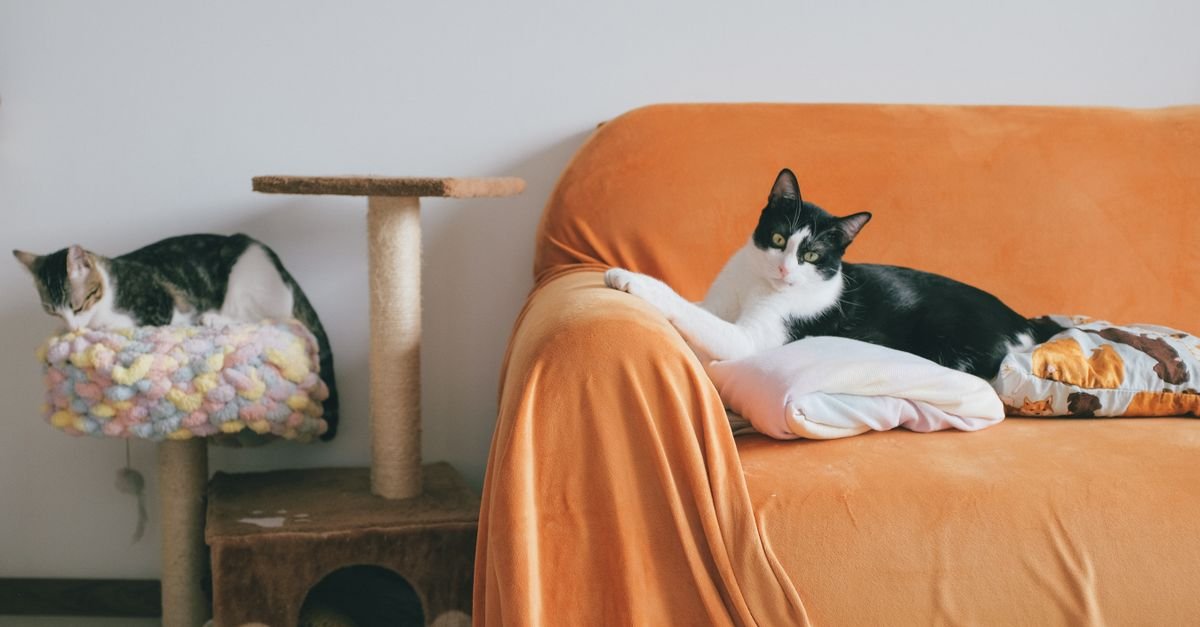
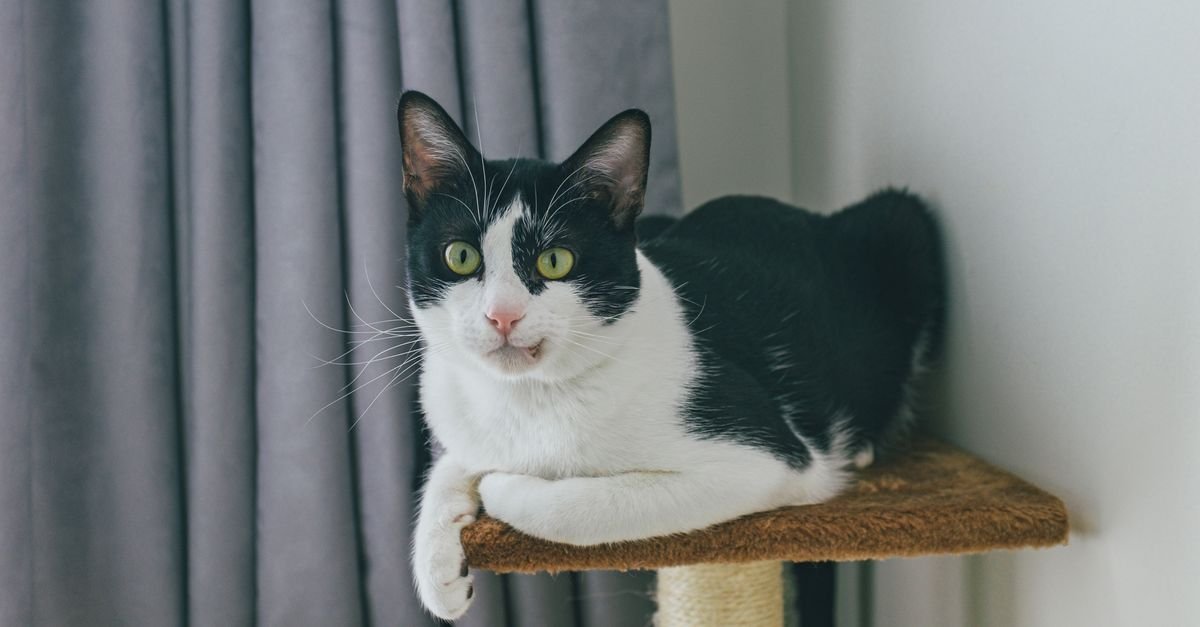
| Jumping on counters | Height, smells, food, attention | Teach a nearby stool, cat tree, or window perch as the approved elevated station |
| Attacking ankles | Movement, predatory play, excitement | Redirect to a wand toy or tossed toy before the cat crouches and launches |
| Demanding attention by vocalizing | Food, interaction, access, or a learned response | Reward a quiet pause, sit, or target touch before offering the requested resource |
| Climbing into unsafe areas | Exploration, warmth, concealment, height | Provide a secure hide, elevated platform, or warm resting site nearby and reward its use |
How to train the replacement behavior
1. Practice away from the problem
Begin when the cat is calm. Reward simple actions such as looking toward you, approaching a mat, touching a target, stepping onto a perch, or placing paws on a scratcher. Short sessions of one to three minutes are often easier than prolonged drills.
A clicker or consistent marker word such as “yes” can identify the action that earned the reward. The marker must be followed by the reward consistently during teaching. Clicker training is optional; clear timing and a meaningful reward matter more than the equipment.[1]
2. Build the behavior in small steps
Reward an approximation before expecting the finished behavior. For a perch, reward looking at it, moving toward it, placing one paw on it, and then climbing fully onto it. For a scratcher, reward sniffing, touching, and eventually scratching. This gradual process, called shaping, helps the cat discover what earns reinforcement without being physically forced into position.[2]
3. Add the household trigger at low intensity
Once the alternative is reliable, introduce the situation that usually produces the unwanted behavior. Begin with a mild version of the trigger, cue or invite the cat to the approved station, reward it there, and increase distractions gradually.
If the cat stops eating, becomes tense, swishes the tail sharply, flattens the ears, hides, or repeatedly attempts to leave, the situation is too difficult. Increase distance, reduce the trigger, or return to an easier step. For fear or anxiety-related behavior, prioritize gradual desensitization and counterconditioning rather than simply demanding obedience.[2]
What to do when the unwanted behavior starts
- Stay neutral. Avoid yelling, chasing, spraying, or physically removing the cat when possible.
- Interrupt gently. Use a trained cue, move a toy, or place the replacement item in position without startling the cat.
- Ask for an easy action. A look, approach, touch, or move to a station can bridge to the alternative.
- Reward the first acceptable response. Do not wait for perfect performance while the cat is highly excited.
- Prevent another rehearsal. Close the door, cover food, move the toy, or temporarily block the area.
Do not turn redirection into a chase game. If the cat learns that scratching the sofa produces an exciting toy, the interruption may accidentally reward the scratching. Whenever practical, cue or capture a brief desirable behavior before starting the alternative activity.
Why scolding and blocking often fail
Blocking a counter or moving a cat away can be useful short-term management, but it does not explain which behavior will work better next time. Scolding may teach the cat to avoid the person rather than avoid the counter. Merck notes that punishment may stop behavior only when the person is present and can increase fear toward the owner.[1]
If a cat sometimes receives food, play, or attention for vocalizing, the occasional payoff can keep the behavior going. Decide which response will no longer be provided and make sure everyone follows the same plan.
A flexible starter schedule
The following seven-day outline is a flexible starting point for organizing practice, not a promised behavior-change timeline. Some cats will need more time, easier steps, or professional guidance.
- Day 1: Record when the behavior happens and what occurs immediately afterward.
- Day 2: Choose one replacement behavior and one high-value reward.
- Day 3: Arrange the environment so the replacement is close, stable, and easy to access.
- Days 4–5: Practice in short sessions away from the trigger.
- Day 6: Introduce a mild version of the trigger and reward early success.
- Day 7: Review the log and increase difficulty only if the cat is succeeding consistently.
Track the frequency of the unwanted behavior, successful replacements, reward used, and trigger intensity. If progress is limited, ask whether the alternative is unclear, poorly placed, less rewarding, introduced too late, or competing with an unmet need.
When redirection is not enough
Seek veterinary guidance for a sudden behavior change, new aggression, painful handling, house-soiling, excessive grooming, compulsive behavior, repeated nighttime distress, or behavior that creates a safety risk. Medical problems, pain, fear, conflict between cats, and environmental stress can all change behavior.
For ordinary household habits, do not stop at “no.” Provide a clear alternative, make it easy to perform, reward it quickly, and manage the environment until the new choice becomes familiar.
Sources
- Behavior Problems in Cats — Merck Veterinary Manual.
- Treatment of Behavior Problems in Animals — Merck Veterinary Manual.
For additional practice ideas, see this beginner’s plan for positive reinforcement training with cats and the guide to keeping a cat off the counter without punishment.
Sources
- Behavior Problems in Cats — Merck Veterinary Manual
- Treatment of Behavior Problems in Animals — Merck Veterinary Manual