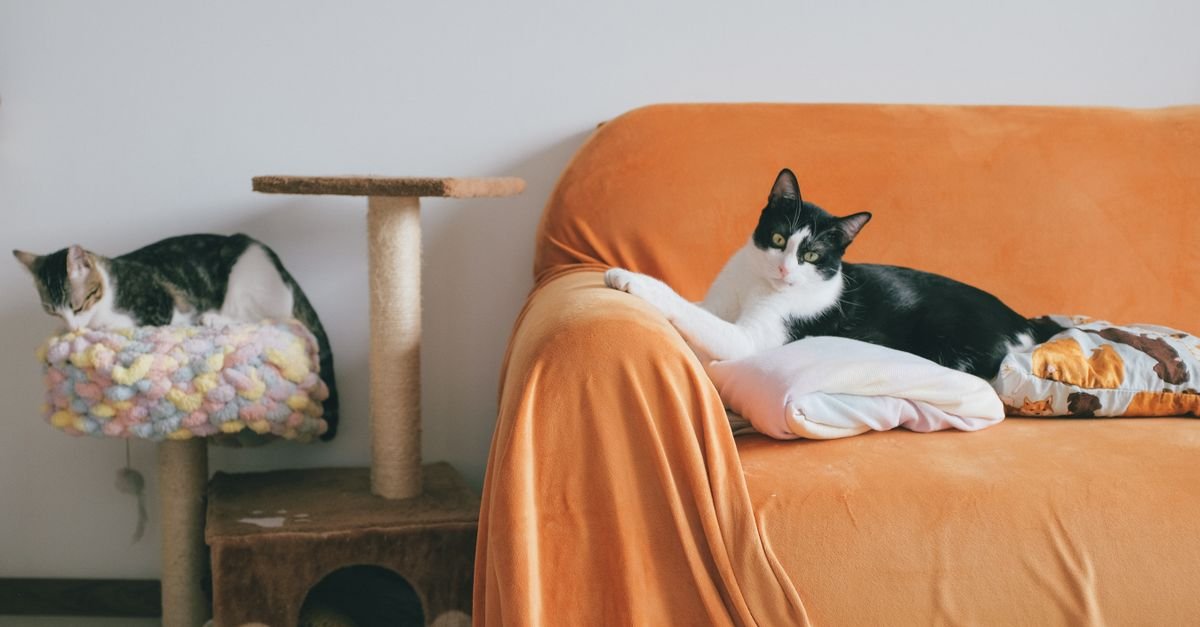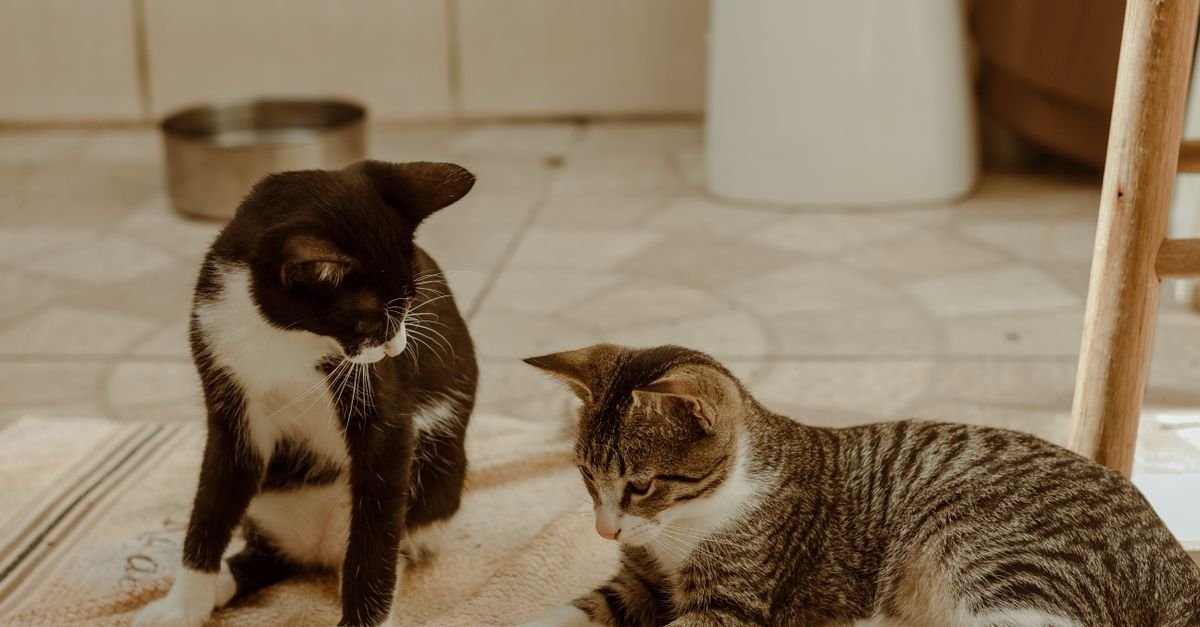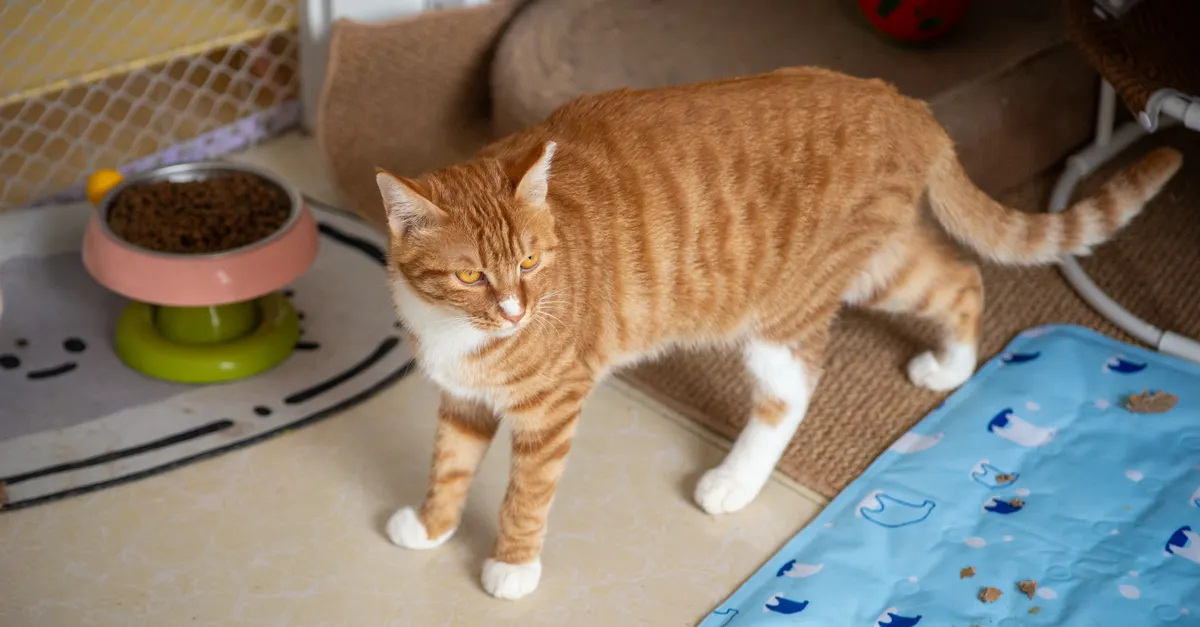
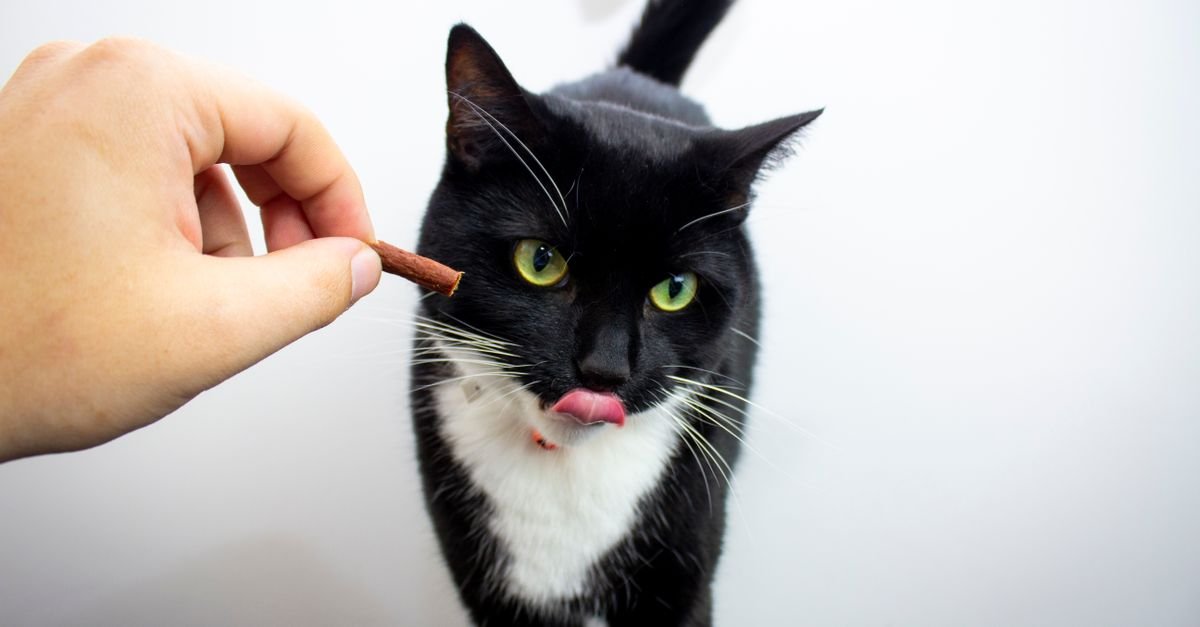
Yes, cats can be trained without punishment. The most reliable beginner approach is to identify a behavior you want, make it easy for your cat to perform, and immediately follow it with something your cat values—such as a small food reward, play, access to a favorite spot, or gentle attention. Over repeated sessions, the behavior becomes more likely to happen again. This is positive reinforcement.[1][2]
Positive reinforcement is not limited to teaching tricks. It can help a cat cooperate with carrier practice, accept brief handling, use a scratching post, move away from a counter, or settle on a mat. The larger goal is not obedience for its own sake; it is to make everyday interactions more predictable, voluntary, and rewarding.
What positive reinforcement means for cats
In behavioral terms, reinforcement is defined by its effect: if a consequence makes a behavior happen more often, it is reinforcing that behavior. A treat is not automatically rewarding for every cat or in every situation. Some cats work harder for a favorite toy, a meal, access to a window, or the opportunity to approach a person on their own terms.[2]
For example, if your cat steps onto a mat and you immediately offer a tiny treat, the cat may begin choosing the mat more often. If your cat touches a target with their nose and you mark that moment with a click or a consistent word before giving the treat, the marker helps clarify which action earned the reward.[3][4]
A marker is optional. You can train successfully by delivering the reward immediately after the desired behavior. If you use a clicker or marker word, first pair it with a reward several times so your cat learns that the sound predicts something worthwhile.[3]
Why punishment often works against cooperation
Scolding, chasing, spraying water, startling a cat, or forcing a cat into position may interrupt behavior in the moment, but these methods do not clearly teach what the cat should do instead. The Feline Veterinary Medical Association’s positive-reinforcement toolkit specifically warns that punishment can create fear and avoidance, including around situations such as carrier use.[1]
When a cat becomes worried, learning and communication usually become harder. A cat may hide, freeze, flee, swat, or avoid the person and object associated with the unpleasant event. That is especially counterproductive when the goal is cooperation during grooming, veterinary care, nail trims, or handling.
Reward-based training does not mean allowing every behavior. It means changing the setup, preventing rehearsal of the unwanted behavior when possible, and reinforcing a safer or more useful alternative. For example, instead of punishing counter-jumping, provide an attractive nearby perch and reward the cat for choosing it.
Prepare before your first training session
- Choose a reward: Try a pea-sized portion of a preferred food, a lickable treat, a toy, or access to an enjoyable activity. Keep portions small, especially if you train frequently.
- Choose one behavior: Begin with something simple, such as looking toward you, touching your hand, stepping onto a mat, or approaching an open carrier.
- Lower the difficulty: Work in a quiet area with few distractions. Put the rewards within reach before you begin.
- Watch body language: A cat that turns away, stops taking rewards, crouches, lashes their tail, pins their ears, or becomes overly grabby may need a break or an easier step. These are practical signs that the cat may be uncomfortable, overstimulated, or no longer engaged; pause and reduce the difficulty rather than pushing forward.[1][4]
- End while it is going well: A few successful repetitions are more useful than continuing until your cat loses interest.
Training should give the cat opportunities to make choices. Do not drag a cat toward a target, hold them in place, or continue after clear signs of distress. If a behavior involves fear, aggression, sudden avoidance, or a major change from your cat’s normal pattern, speak with a veterinarian about possible medical or emotional contributors before treating it as a simple training problem.
A practical first-week training plan
The following routine is designed for a beginner. Use one goal for the entire week, or move to the next step only when your cat is consistently comfortable with the current one. Keep sessions short and end on a successful repetition; adjust the frequency to your cat’s interest, schedule, and tolerance.
| Day | Goal | What to do |
|---|---|---|
| 1 | Find the reward | Offer several safe reward options and identify what your cat readily chooses. Give the reward after calm engagement, such as looking toward you or approaching. |
| 2 | Teach the marker | If using a clicker or marker word, make the sound and immediately give a reward. Repeat briefly, without asking for a behavior yet. |
| 3 | Capture a simple behavior | Mark and reward a naturally occurring behavior, such as sitting, touching your hand, stepping onto a mat, or looking at an open carrier. |
| 4 | Add a gentle cue | Say the cue just before the behavior is likely to happen. Mark and reward the response. If the cat does not respond, make the task easier rather than repeating the cue. |
| 5 | Practice in a second location | Move only slightly—such as from one side of the room to another. Reward generously for the familiar behavior in the new context. |
| 6 | Apply it to daily care | Use the behavior for a useful routine: stepping onto a mat, approaching the carrier, presenting a paw, or moving to a perch. Reward each cooperative step. |
| 7 | Review and simplify | Note what your cat enjoys, what causes hesitation, and which step is too difficult. Keep the successful version in your routine and adjust the harder part. |
Meaningful value element: a training log. After each session, record three things: the behavior you reinforced, the reward that worked best, and the point at which your cat lost interest or became uncomfortable. This turns vague impressions into useful information. If progress stalls, you can identify whether the reward is weak, the environment is distracting, the steps are too large, or the behavior is competing with a more rewarding option.
How to train cooperation for everyday situations
Carrier practice
Leave the carrier accessible with the door secured open. Reward your cat for looking at it, approaching it, putting one paw inside, and eventually resting inside. Progress at the cat’s pace. Avoid turning the carrier into an object that only appears before an unavoidable trip. The Feline Veterinary Medical Association toolkit identifies forced carrier experiences as a situation where fear can increase future avoidance.[1]
Handling and grooming
Start with a brief touch in an area your cat already accepts, then reward. Gradually build duration or move to a less comfortable area, backing up if the cat shows discomfort. For nail care, the first goal may simply be allowing you to touch a paw; clipping does not need to happen during the first session. Stop before resistance escalates.[4]
Scratching furniture
Place an appropriate scratching surface beside the location your cat already chooses. Reward investigation, stretching, and scratching on the surface. You can also make the approved option more appealing with placement, texture, height, or play. For more setup ideas, see how to stop a cat from scratching the couch without punishment.
Counter-jumping
Do not wait until your cat is already on the counter to begin teaching. Reward a nearby perch, mat, or cat tree before the jump occurs. Keep tempting food and interesting objects off the counter while the new habit develops. For a fuller household setup, read how to keep a cat off the counter without punishment.
Common beginner mistakes
- Rewarding too late: The cat may connect the reward with whatever happened immediately before it, not the behavior you intended.
- Making the steps too large: Asking for a full carrier entry, long handling session, or complete trick before rewarding can create frustration.
- Repeating a cue: If “come” is repeated five times, the cat may learn that the first four repetitions do not matter. Reset and make the next attempt easier.
- Using a reward the cat does not value: Reinforcement is individual. Change the reward or the training context if motivation is low.
- Training only when something is wrong: Practice cooperative behaviors during calm moments, not only when you need to rush to the veterinarian or interrupt mischief.
- Ignoring the environment: Training is less effective when the cat has constant access to a more rewarding option, such as food left on a counter or an exciting outdoor view during a handling exercise.
When to get professional help
Positive reinforcement is appropriate for many routine training goals, but it is not a substitute for evaluating serious behavior concerns. Seek veterinary guidance for sudden changes, persistent elimination problems, escalating aggression, severe fear, self-injury, or behavior that appears linked to pain or illness. A veterinarian can help determine whether a medical issue, environmental stressor, or behavior plan needs attention.
For everyday goals, begin with one behavior, one reward, and one small step. The most useful measure of success is not whether your cat performs a trick on command; it is whether your cat becomes more willing to participate in ordinary care and household routines.
Sources
- Positive Reinforcement Training Educational Toolkit — Feline Veterinary Medical Association
- Talking Terms – Positive Reinforcement — American Veterinary Society of Animal Behavior
- An Introduction to Positive Reinforcement and “Mark and Reinforce” Training — American Veterinary Society of Animal Behavior
- The Teachable Cat — American Veterinary Society of Animal Behavior