
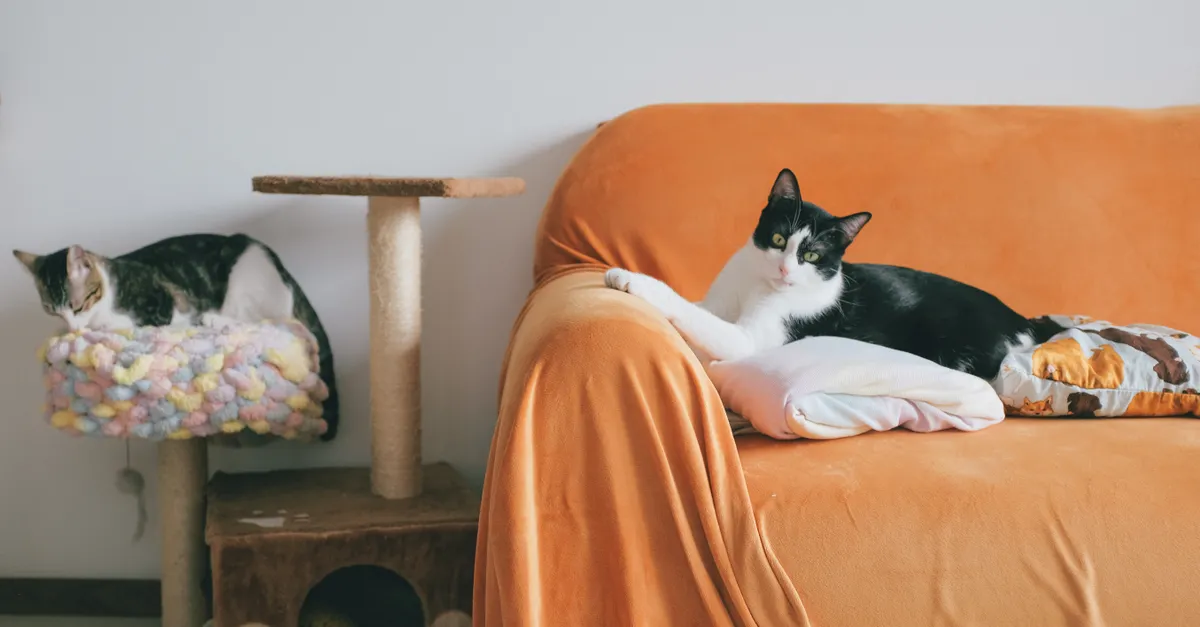
Most first-time cat owners need fewer supplies than they expect. Before your cat arrives, focus on four basics: a quiet home-base area, food and water, a correctly placed litter box, and safe ways to hide, scratch, rest and play. Everything else can be added after you learn your individual cat’s preferences.
This room-by-room checklist is designed for an apartment or other indoor home. It separates must-haves from nice-to-haves so you can avoid rushed purchases while still covering the first days safely.
Before shopping: choose a home-base room
Rather than opening the entire apartment immediately, prepare one quiet room or contained area where your cat can decompress. A bedroom, office or bathroom may work if it has safe hiding places, good ventilation and enough room to keep food, water and the litter box apart. The ASPCA recommends creating a dedicated safe space and introducing a new pet to the home gradually.[1]
In a small apartment, this does not have to be a whole room forever. It can be a carefully arranged corner with a closed door or a securely installed, cat-proof enclosure that cannot be climbed over, pushed aside or escaped from. A standard tall pet gate is not reliable containment for a cat. Let your cat’s comfort guide how quickly you expand access.
Entryway and travel area
Must-haves
- A secure cat carrier: Use it for the trip home and future veterinary visits. Leave it open in the home-base area with familiar bedding or treats so it becomes part of the environment rather than a warning that something stressful is about to happen.
- Adoption and medical records: Keep vaccination, parasite-treatment, microchip and feeding information in one place.
- A plan for the first veterinary visit: Ask the shelter, rescue or previous caregiver what care has already been provided, then arrange follow-up with a veterinary practice.
Nice-to-haves
- A washable carrier liner or spare towel.
- A lightweight carrier cover that leaves adequate airflow and does not overheat the cat.
- A small folder or digital note for records, questions and changes in appetite, stool or behavior.
Living room or home-base area
Must-haves
- A hiding place: A cardboard box, covered bed or open carrier can give your cat a retreat. Do not force a frightened cat out of hiding.
- A comfortable resting surface: A folded towel or washable blanket is sufficient at first; a specialized cat bed is optional.
- At least one sturdy scratching surface: Choose a post or pad that will not slide or topple. A vertical post should be tall enough for the cat to stretch, and some cats prefer horizontal cardboard or other textures. The ASPCA recommends a stable scratching post of about three feet for cats that use vertical scratching surfaces.[3]
- A few simple toys: Start with two or three toys that allow chasing, batting or supervised interactive play. Remove toys with loose strings or small detachable parts when you are not watching.
Nice-to-haves
- A cat tree, shelf or window perch that creates safe vertical space.
- A food puzzle or treat-dispensing toy.
- A grooming brush matched to your cat’s coat.
- A second scratching texture placed near furniture your cat may be tempted to scratch.
Vertical space can be especially useful in an apartment because it increases usable territory without taking up much floor area. Only use shelves, perches and furniture that are securely anchored and positioned away from unsafe jumps.
Kitchen or feeding area
Must-haves
- Food appropriate for your cat’s life stage: If possible, begin with the food your cat is already eating and change it gradually if a different diet is needed. Ask the adoption organization or your veterinary team about the appropriate amount and schedule.
- A food dish: A shallow, easy-to-clean dish is usually enough.
- A separate water bowl: Keep fresh water available and place it away from the litter box. International Cat Care recommends positioning food, water and litter resources as far apart as the space allows.[4]
Nice-to-haves
- A second water station in another part of the apartment.
- A fountain, if your cat prefers moving water and you are willing to clean it regularly.
- A washable mat beneath the bowls.
Do not buy a large supply of unfamiliar food before you know what your cat will eat. A small initial quantity reduces waste and makes it easier to follow the cat’s established diet while you settle in.
Bathroom, laundry area or other litter-box location
Must-haves
- One clean, accessible litter box: This is the minimum for one cat. If space permits, a second box is preferred. In a multilevel home, placing a box on each level may be practical. ASPCA guidance emphasizes accessible, quiet locations and a box for each cat plus one extra when possible.[3]
- Unscented litter: Strong fragrances can make some cats avoid a box. If the shelter or rescue uses a particular litter, start with that type before experimenting.
- A scoop and waste container: Scoop at least daily and keep the area clean. ASPCA advises avoiding ammonia-based or strongly scented cleaners for litter boxes.[3]
- A box that is easy to enter: A kitten, older cat or cat with mobility limitations may need a low entry. The box should be large enough for the cat to turn around comfortably.
Nice-to-haves
- A second litter box when space permits.
- A litter-tracking mat.
- A second litter scoop for another room.
- A lidded waste pail, provided it is emptied regularly.
Keep litter boxes away from noisy appliances, narrow dead ends and busy doorways. Do not place food directly beside a litter box. If your cat suddenly stops using the box, contact a veterinary professional rather than assuming it is simply stubborn behavior; litter avoidance can have medical as well as environmental causes.[3]
Every room: the apartment safety sweep
Before the cat arrives, get down near floor level and look for hazards that are easy to miss from standing height. ASPCA and AAHA guidance highlights several common preparation steps.[1] [4]
- Secure window screens and check that windows cannot open wide enough for escape.
- Bundle or cover electrical cords, blind cords and dangling cables.
- Remove lilies and research any houseplant before bringing it within reach.
- Store medications, cleaning products and pest-control products behind closed doors.
- Pick up thread, ribbon, rubber bands, hair ties and other small objects that could be swallowed.
- Block narrow gaps behind appliances or furniture where a cat could become trapped.
- Check balconies, doors and screens for escape routes. Never assume an elevated balcony is safe without appropriate cat-proofing.
- Put fragile objects out of reach until you know where your cat climbs and jumps.
What you can skip at first
These items may be useful later, but they are not required for the first day:
- Expensive beds, automatic feeders or automatic litter boxes.
- Large quantities of toys or several varieties of treats.
- Clothing, costumes or accessories that restrict movement.
- Cat furniture that cannot be returned or safely anchored.
- Strongly scented litter, room sprays or cleaners intended to make the apartment smell “pet-free.”
Spend first on safety, reliable litter access and a carrier. Then observe what your cat actually uses. A cardboard box may be preferred over a designer bed, while a simple scratch pad may outperform a tall post.
A practical first-day sequence
- Close the home-base room and remove hazards before opening the carrier.
- Place the carrier on the floor, open the door and allow the cat to exit voluntarily.
- Show the locations of water, food, hiding places and the litter box without crowding the cat.
- Keep noise, visitors and handling to a minimum for the first several hours.
- Offer a small meal according to the existing feeding routine, unless the adoption organization or veterinary professional advised otherwise.
- Expand access one area at a time once your cat is eating, drinking, resting and using the litter box comfortably.
If you already have another cat, do not begin with free access between them. Use separate resources and a gradual introduction plan; see how to introduce a new cat to a resident cat.
The minimum checklist
| Area | Buy or prepare before arrival | Can wait |
|---|---|---|
| Travel | Secure carrier, records | Carrier cover, spare liner |
| Home base | Hiding place, blanket, scratching surface, toys | Cat tree, perch, puzzle feeder |
| Feeding | Familiar food, food dish, water bowl | Fountain, second water station |
| Litter | One clean, accessible box, unscented litter, scoop | Second box, tracking mat, specialty box |
| Safety | Secure screens, cords and medications; remove toxic plants | Decorative storage and upgrades |
Meaningful takeaway: If you can provide a secure carrier, a quiet retreat, food and water, one clean accessible litter box, a stable scratching option and a hazard-free space, you have covered the essentials. A second litter box is preferred when space permits. The best next purchase is determined by your cat’s behavior—not by a generic shopping list.
For a broader preparedness add-on, keep a basic pet emergency kit available and review it before you need it: pet emergency kit checklist.
References
- Adoption Tips: Preparing Your Home for a Dog or Cat, ASPCA.
- General Cat Care, ASPCA.
- Cat Friendly Homing Information Pack, International Cat Care.
- Essential Tips for Pet-Proofing Your Home, American Animal Hospital Association.
Sources
- Adoption Tips: Preparing Your Home for a Dog or Cat — ASPCA
- General Cat Care — ASPCA
- Cat Friendly Homing Information Pack — International Cat Care
- Essential Tips for Pet-Proofing Your Home — American Animal Hospital Association