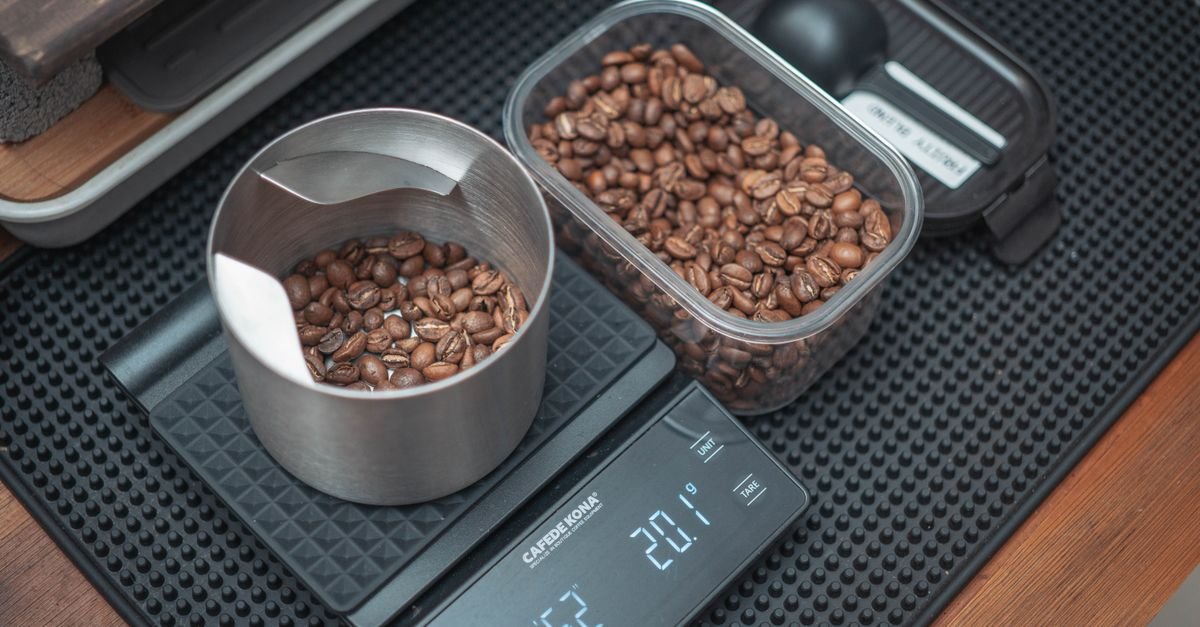
The most consistent way to measure dog or cat food is to use a kitchen gram scale for dry food, follow the label for the specific product, and record the entire daily amount—including treats and food given by other people. Measuring cups are useful for a quick routine, but they can deliver different amounts depending on the kibble’s shape, size, and how tightly it settles. Veterinary nutrition and weight-management guidance supports weighing dry food when possible, especially when precise portions are important.[1]
Food-label feeding directions are a starting point rather than a guarantee that the same portion suits every pet. Age, life stage, activity, neuter status, body condition, health, and the calorie density of the food all affect how much an individual dog or cat needs.[2]
1. Start with the exact food label
Write down the exact product, recipe, and format you are feeding. “Chicken recipe” or “indoor cat food” is not specific enough if a brand sells several versions with different calorie densities.
Look for three pieces of information:
- Feeding directions: These usually provide a daily amount based on body weight or life stage.
- Calorie content: Look for wording such as kilocalories per cup, can, pouch, kilogram, or another stated unit.
- Nutritional adequacy statement: For a main diet, look for a statement indicating that the food is complete and balanced for the appropriate species and life stage. Treats and snacks are often not intended to be a pet’s sole diet.[3]
Use the feeding guide as your initial reference, then assess whether your pet’s weight and body condition remain appropriate. A label cannot account for every individual pet or every calorie your pet receives from treats, toppers, chews, supplements, table food, or medication-administered food.
2. Choose grams when precision matters
A level measuring cup is better than an overflowing scoop, but weight is usually more repeatable. A cup of large, airy kibble may weigh less than a cup of small, compact kibble. Even the same food can vary if it is scooped, poured, shaken, or packed down.
To use a kitchen scale:
- Place the empty bowl or storage container on the scale.
- Press the tare or zero button.
- Pour in the daily amount in grams.
- Divide that total into meals, or prepare each meal separately.
If the label lists calories per kilogram, divide that number by 1,000 to estimate calories per gram. For example, a food labeled at 3,600 kcal/kg provides 3.6 kcal per gram. A hypothetical daily target of 360 kcal would equal 100 grams of that food. This example demonstrates the conversion only; it is not a feeding recommendation for a particular pet.
When switching foods, do not assume the old number of cups or grams transfers directly. Different products can contain different amounts of energy in the same volume or weight. Recheck the new label and, for a prescribed diet or a pet with a weight-related health concern, confirm the calculation with your veterinary team.[4]
3. Turn the daily amount into a household routine
Once you have a daily amount, make it difficult to accidentally feed extra.
For dry food
- Weigh the full daily ration in the morning and store it in a container.
- Use that container for every meal, training reward, or food puzzle that day.
- If several people feed the pet, nobody adds food unless it comes from the measured daily supply.
For canned or pouch food
- Check whether the label gives calories per can, pouch, gram, or another unit.
- Use a food scale if you need to divide a can or pouch into precise portions.
- Mark the container with the pet’s name and the date if multiple pets eat different foods.
For mixed feeding
Count the dry and wet portions together rather than treating each as a separate allowance. If the wet food supplies part of the daily calories, reduce the dry food accordingly. The same principle applies to toppers, broths, supplements, dental chews, and food used to give medication.
4. Count treats as part of the daily total
For most healthy pets, AAHA nutrition guidance recommends keeping treats, snacks, table food, and similar extras at no more than 10% of total daily calories, with the main complete-and-balanced food providing at least 90%.[1] Some pets need a different plan because of age, disease, allergies, or a prescribed diet.
A simple method is to prepare a daily treat allowance:
- Read the treat package for calories per treat, gram, or piece.
- Count out the day’s treats in the morning.
- Keep them in a small jar or container.
- When the container is empty, use praise, play, petting, or a portion of the pet’s regular food instead of adding more.
For training, reserve part of the regular daily food and use it as rewards. This avoids adding calories while still allowing frequent reinforcement. For cats, small pieces of their usual food can work well during short training sessions; see this beginner cat training plan for a broader reward-based routine.
5. Use a feeding log when more than one person feeds the pet
Inconsistent portions often come from repeated feeding rather than one obviously large meal. A visible log can solve the “I thought you fed them” problem.
| Item to record | What to write down |
|---|---|
| Main food | Food name, grams or cans, and meal time |
| Treats | Number or approximate grams and who gave them |
| Extras | Toppers, table food, chews, supplements, and food used with medication |
| Meal completion | Whether the pet ate all, some, or none of the portion |
| Observations | Changes in appetite, vomiting, diarrhea, or unusual food-seeking |
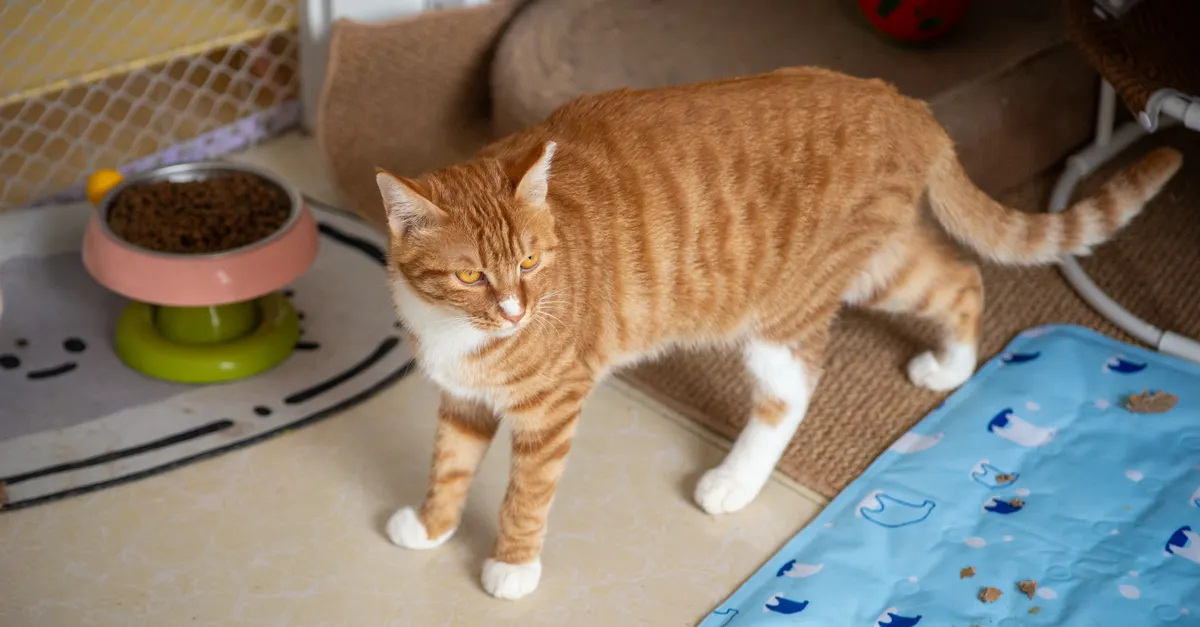
For homes with several cats, separate feeding areas or timed access may be needed so one cat does not consume another cat’s ration. A measured portion is only useful if the intended pet actually eats it. Our guide to feeding multiple cats without food competition covers practical ways to reduce food stealing and rushing.
6. Check whether the portion is working
Keep the portion consistent long enough to observe a trend, then reassess your pet’s body weight, visible body shape, appetite, and activity. For many pets at an appropriate body condition, you should be able to feel the ribs without a thick fat covering and see a waist from above, although breed and body type matter.[2]
Do not make a major restriction based only on a visual guess. Puppies and kittens, pregnant or nursing pets, underweight animals, pets with chronic disease, and pets eating a therapeutic diet may need individualized guidance. Contact a veterinarian if your pet is losing or gaining weight unexpectedly, refuses food, has persistent digestive signs, or needs a weight-loss plan.
If a veterinary professional has already prescribed a daily calorie or gram target, use that target rather than replacing it with a general label recommendation. Weight-management plans may require follow-up adjustments, and rapid or unsupervised restriction can create nutritional problems.
A one-minute portion system to start today
- Choose one exact food and photograph or record its calorie statement.
- Measure the full daily ration—preferably in grams.
- Set aside the day’s treats before the first meal.
- Divide the main ration into labeled meals.
- Place a feeding log where everyone can see it.
- Review the pet’s weight and body condition regularly, and ask your veterinary team whether the amount remains appropriate.
The goal is not to create a complicated nutrition spreadsheet. It is to replace guessing with one repeatable system that every person in the household can follow.
Sources
- 2021 AAHA Nutrition and Weight Management Guidelines for Dogs and Cats — American Animal Hospital Association
- 5 Ways to Know How Much to Feed Your Pet — American Animal Hospital Association
- “Complete and Balanced” Pet Food — U.S. Food and Drug Administration
- Creating a Weight Reduction Plan for Dogs — VCA Animal Hospitals