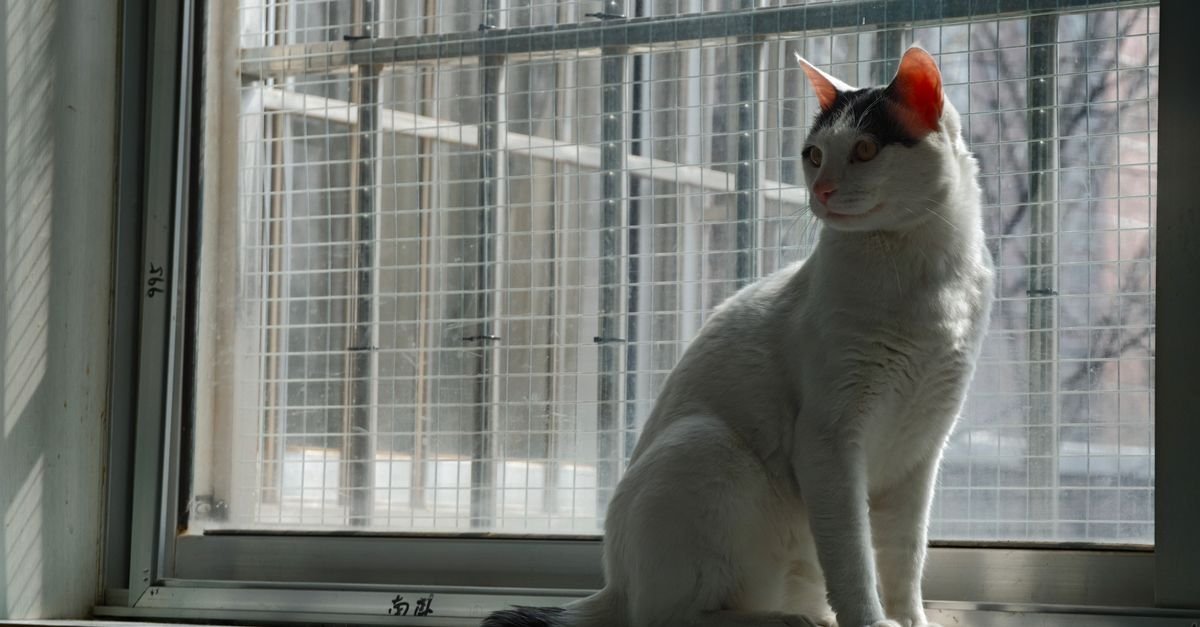
The safest rule is simple: do not leave a cat near an open window unless the opening has a securely anchored, cat-resistant screen or barrier appropriate to that window. Ordinary insect screens may keep insects out but may not be strong enough to restrain a cat. Cats can lose their balance while watching birds or other outdoor activity, so do not assume a cat will understand the danger of a ledge or balcony.[1]
Windows are only one part of a seasonal home-safety check. Cleaning, painting, pest control, furniture assembly, and small repairs can introduce chemicals, sharp objects, cords, and escape routes. A few minutes of preparation can make these projects much safer for your cat.
The 10-minute cat home-safety audit
Walk through each room with your cat’s normal behavior in mind. Look for places where a curious animal could jump, squeeze through, lick, chew, or hide.
- Check every openable window. Confirm that each screen or barrier is cat-resistant, fits tightly in its frame, and is securely anchored so it cannot be pushed out or dislodged. If you are unsure that an existing screen can restrain a cat, keep the window closed until you install a suitable barrier. Do not rely on a ledge or window guard unless it is appropriate for the opening and securely installed.
- Inspect balcony and terrace access. Keep cats away from open balconies, fire escapes, and other elevated areas unless they have been fully enclosed with a cat-safe barrier. Do not rely on a cat’s usual calm behavior; an outdoor noise, bird, or sudden movement can change the situation.
- Secure cords and tools. Put drills, saws, blades, nails, screws, wires, and extension cords away before allowing your cat back into a project area. Repair materials and cords can create chewing, swallowing, electrical, or physical-injury hazards.[2]
- Look at the floor, not just the shelves. Sweep up drywall pieces, sawdust, insulation fibers, paint chips, staples, and other debris. Keep cats away from project debris and clean according to the material and product instructions before allowing access again.[2]
- Move chemicals behind a closed door. Store cleaners, paint, solvents, adhesives, pesticides, fertilizers, batteries, and similar products in a secure cabinet or locked storage area. A high shelf is not enough if your cat can climb to it.
- Read the product label before use. “Natural” does not automatically mean pet-safe. Follow the specific product label for dilution, ventilation, application, drying time, cleanup, and re-entry. For insecticide treatments, keep pets away for the label-specified period and do not allow re-entry until the label’s conditions have been met, such as completion of treatment, drying, and required ventilation.[3]
- Check wet surfaces and contaminated clothing. Keep cats away from freshly cleaned floors, painted surfaces, treated areas, open containers, rags, and footwear that may carry chemicals. Follow the product label for ventilation, drying, cleanup, and re-entry. Wash your hands and change contaminated clothing before handling your cat when the label calls for those precautions.
- Close escape routes during deliveries and repairs. Put your cat in a quiet, closed room before contractors arrive, doors are propped open, or furniture is moved. A temporary safe room is usually safer than trying to supervise a cat around unfamiliar people and open exits.
- Protect food, water, litter, and toys. Move these items away from paint, dust, fumes, sprays, and construction debris. Replace anything that has been contaminated rather than assuming it is safe after a quick wipe.
- Do a final release check. Before giving your cat access again, close containers, remove tools, sweep the floor, and follow the product label’s instructions for ventilation, cleanup, drying, and re-entry. Check that all windows and exterior doors are secure.
Window safety: what “secure” really means
A cat-resistant screen or barrier should be securely anchored and appropriate for the type of window and opening. Check the corners, fasteners, tracks, latches, and any gaps around the edges. Recheck the installation after cleaning, moving furniture, installing an air conditioner, or opening a window in a new position.
Keep chairs, shelves, cat trees, and other launch points far enough from an open window that your cat cannot use them to gain extra height or shove against a barrier. A favorite perch is fine when the window is closed or properly secured; the risk comes from treating the ledge itself as protection.
If you rent, ask the property manager to repair damaged screens or window hardware. Until the problem is fixed, keep the window closed and restrict access to the room. Use a closed-window perch or another indoor enrichment option while the opening is being repaired; a closed window does not provide ventilation.
How to manage a home project safely
The safest setup is a closed, cat-free work zone. Ideally, place your cat in a comfortable room with water, litter, bedding, and familiar enrichment before you begin. This is especially important when a project involves paint, mineral spirits, solvents, spray foam, polyurethane glue, insulation, power tools, or insecticides. These materials can create poisoning, irritation, foreign-body, burn, or physical-injury risks.[2]
Keep the safe room separate from the work area, not merely on the other side of a baby gate. Cats can climb, squeeze through gaps, and slip past people carrying supplies. If the project affects the whole home, arrange another secure location before starting.
For a longer renovation, maintain a daily closing routine:
- Place all products in closed storage.
- Remove nails, screws, blades, wires, and scraps.
- Vacuum or sweep dust and debris using precautions appropriate to the material.
- Check for wet paint, adhesive, insulation, or treatment residue.
- Follow each product label’s instructions for ventilation, drying, cleanup, and re-entry.
- Close windows and exterior doors before opening the cat’s room.
- Keep the product labels available in case you need to call for advice.
What to do if your cat is exposed or falls
If your cat chews a product, walks through wet chemicals, or may have inhaled fumes, contact a veterinarian or animal poison-control service promptly. Do not wait for obvious symptoms after a suspected chemical exposure. Have the product container or label available, including the active ingredients and concentration when listed. The ASPCA Poison Control number is (888) 426-4435; fees may apply.[4]
After a fall, contact a veterinarian promptly for triage, even if your cat appears to be walking normally. Follow the veterinarian’s instructions and minimize handling or movement while arranging care. If the cat has trouble breathing, cannot stand, or appears severely distressed, tell the veterinary team immediately and follow its emergency instructions.
A seasonal checklist you can save
| Area | Check | Action if it fails |
|---|---|---|
| Windows | Barrier is cat-resistant, intact, securely anchored, and appropriate for the opening | Close the window and repair or replace the barrier |
| Balcony or exterior door | No unsupervised access or open escape route | Use a closed room during ventilation, deliveries, or repairs |
| Cleaning supplies | Products are labeled and stored behind a closed door | Move them to secure storage; follow product-label directions |
| Renovation zone | No tools, cords, debris, wet materials, or fumes accessible | Keep the cat separated until label-specific ventilation, cleanup, and drying requirements are complete |
| Emergency information | Veterinarian, emergency hospital, and poison-control details are easy to find | Save them in your phone and keep product labels available |
For a broader apartment setup review, see our first-time cat owner checklist. It can help you evaluate hiding places, supplies, and everyday escape risks alongside this window audit. You may also want to keep a pet emergency kit checklist available before starting a major project.
The practical takeaway
Make secure window barriers and project separation non-negotiable. Before opening a window or starting household work, secure your cat first; after the project, inspect the room at floor level and follow every product label’s instructions for ventilation, drying, cleanup, and re-entry. This routine addresses common hidden risks without requiring your cat to be locked away all day.