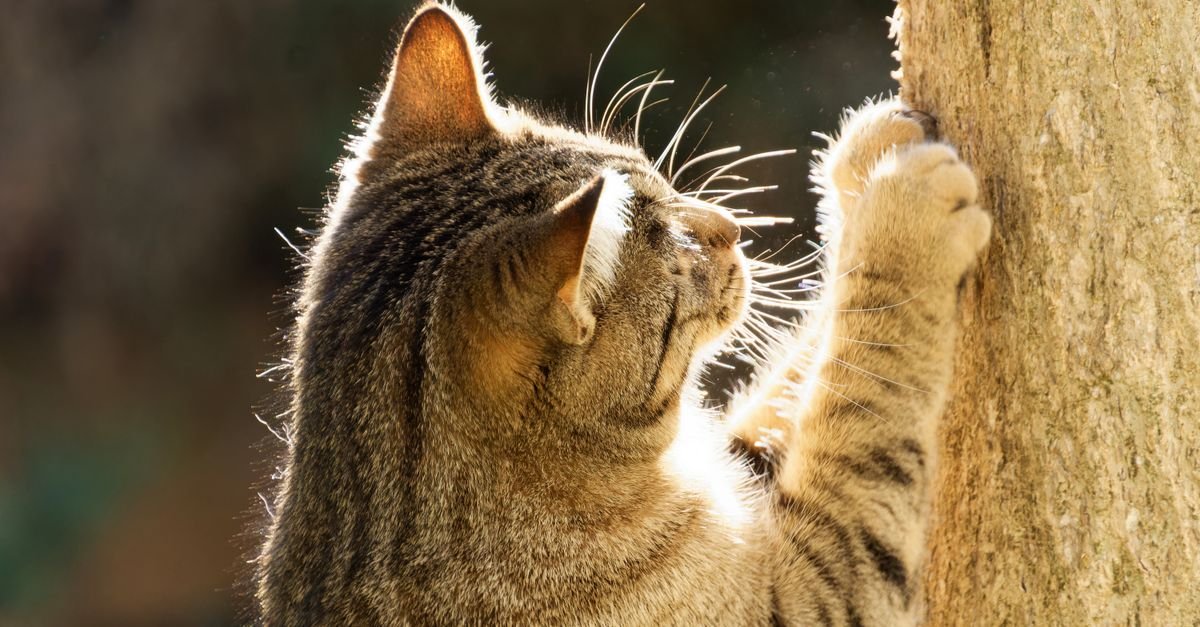
Cats scratch to maintain healthy claws, exercise the muscles in their front legs and spine, and mark territory through scent communication.[1] Scratching is a normal, instinctive feline behavior, not misbehavior.[2] Understanding why cats scratch helps you redirect the behavior rather than punish it.
Claw Maintenance and Muscle Exercise
Cats scratch to keep their claws in good condition.[1] When cats scrape their claws down a surface, they shed the worn outer layers—the discarded claw husks you sometimes find near scratched areas.[1] This process keeps claws sharp and healthy. Scratching also stretches and exercises the muscles in a cat's front legs and spine.[1] Kittens start scratching from around 5 weeks of age.[1]
Territorial Marking Through Scent
Scratching serves as territorial communication. Scent glands between a cat's paw pads produce a unique smell that is left on surfaces when they scratch.[3] This scent, combined with the visible scratch marks and discarded claw husks, leaves both a chemical message for other cats and a visual reminder for the scratching cat.[1][3]
While cats may scratch less indoors as a means of territorial communication compared to outdoor marking, the scent deposits made while scratching may provide feelings of enhanced physical safety and security to the scratching cat.[1] Cats will often scratch vigorously in the presence of their owners or other cats as a sign of territorial confidence.[1]
Why Furniture Gets Targeted
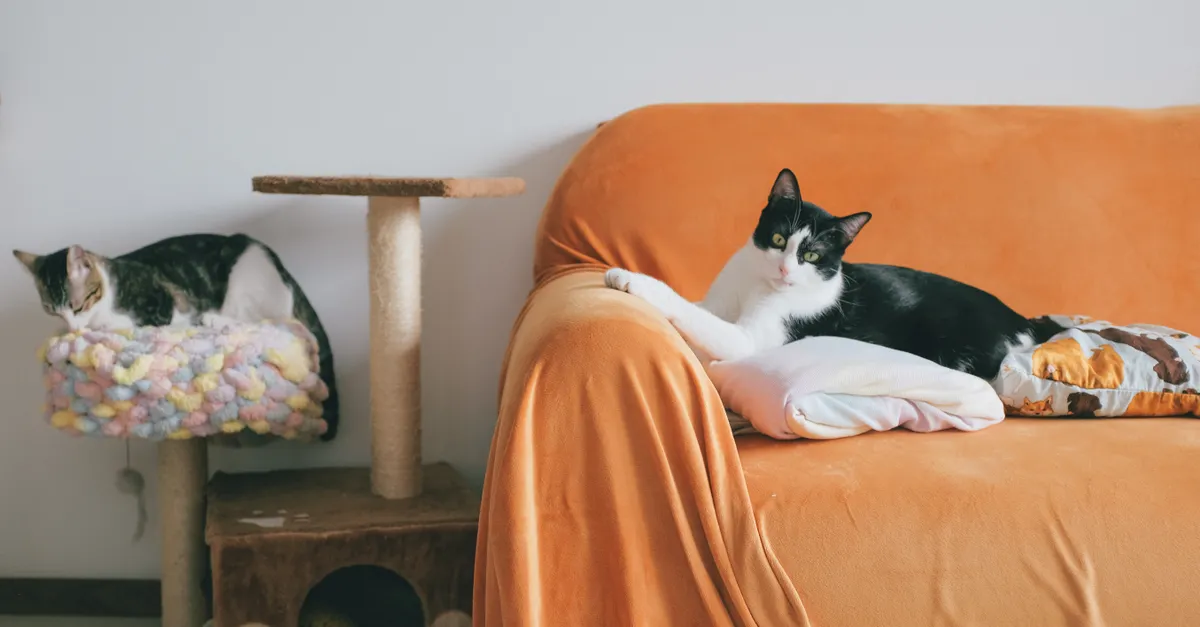
In the wild, cats would normally scratch tree bark or similar surfaces. For indoor cats, furniture such as a sofa or chair often serves as a replacement where they can express this behavior.[3] Cats prefer to scratch objects that are sturdy or tall, allowing them to get a good grip and dig their claws in.[3]
Some cats also learn that scratching certain objects means they get more attention from their owners.[3] Scratching can become an attention-seeking tool if the behavior is positively reinforced.[1]
Signs of Stress-Related Scratching
If scratched locations are widespread throughout the home, particularly around doorways and windows, this may signal stress or insecurity.[1] Whether the scratching represents claw maintenance, marking, or both depends on the dynamics of your cat household, the pattern of locations, and various other factors.[1]
Redirecting Scratching to Appropriate Surfaces
Because scratching performs multiple biological functions, you cannot stop cats from scratching—nor should you try.[1] Instead, redirect the behavior to appropriate surfaces. Learn how to redirect scratching without punishment.
Each cat has preferences for the type of surfaces they like to scratch and whether they prefer vertical or horizontal scratching.[1] If your cat is scratching textured wallpaper at a certain height, provide a vertical scratching surface with similar texture that allows your cat to stretch to the same level.[1] Kittens or senior cats might prefer softer surfaces such as large angled or horizontal cardboard scratchers because they provide less resistance.[1]
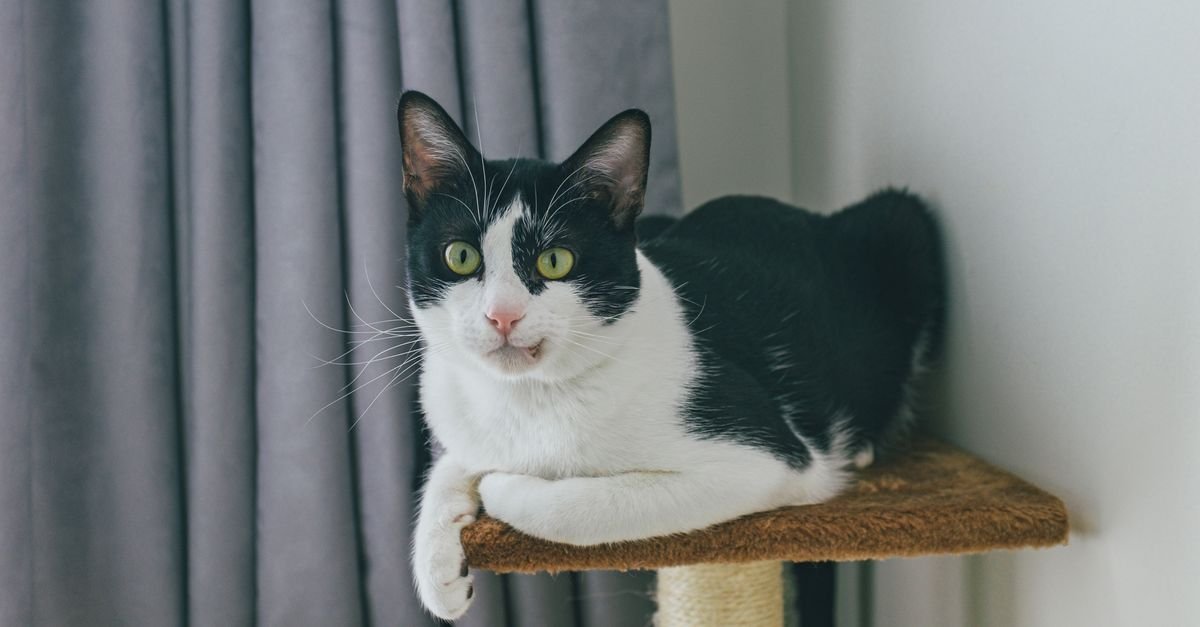
Upright posts need to be tall enough for your cat to scratch at full stretch.[1] Posts should have a sturdy base so they don't tip over, frightening or injuring your cat.[2] Place scratching posts in areas where your cat spends time, and near their favorite bed since cats often scratch after sleep.[1]
Scratching is a necessary behavior rooted in claw maintenance, muscle exercise, and territorial communication. Providing appropriate outlets that match your cat's preferences redirects this instinct away from furniture while meeting their biological needs.
Sources
- Scratching on furniture and carpets — International Cat Care
- How to Stop Cats From Scratching the Furniture — PetMD
- Why Do Cats Scratch? — Cats Protection