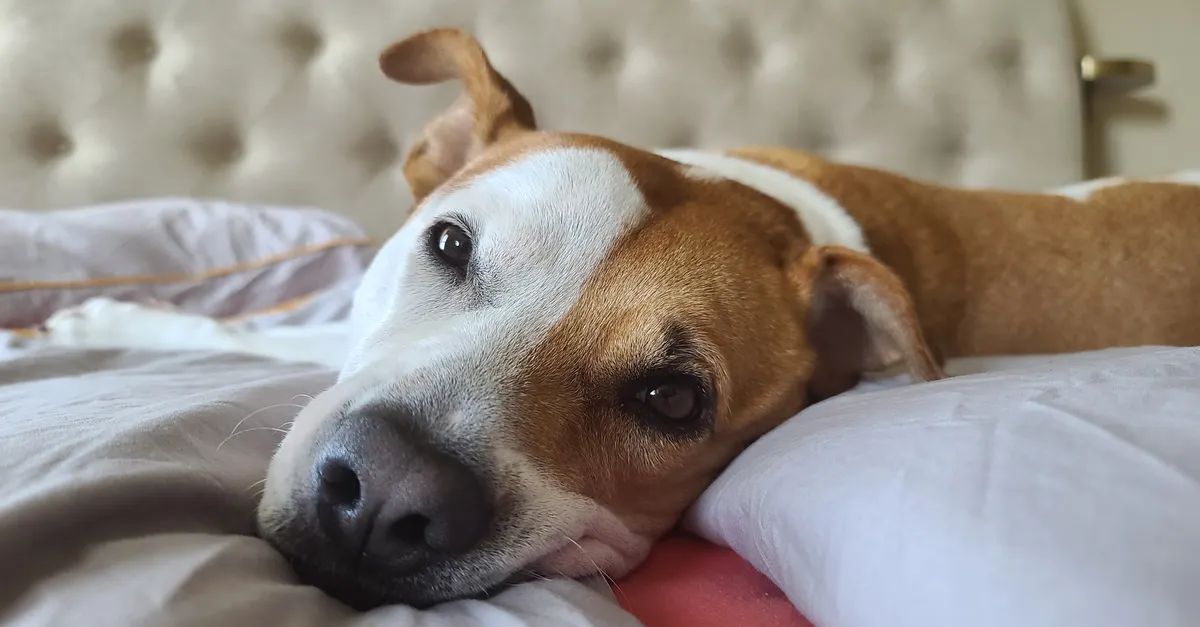
Yes—many senior dogs can benefit from short, gentle activity at home. The safest choice depends less on your dog’s age than on their current mobility, confidence, balance, and recovery after activity. Gentle movement and enrichment can help support engagement and appropriate weight management when adjusted to the individual dog.[1]
Start with activities that your dog can perform smoothly on a nonslip surface. Keep sessions short, reward calm participation, and stop before your dog looks tired or uncomfortable. If your dog has a diagnosed condition, a recent injury, unexplained exercise intolerance, or a noticeable change in movement, ask your veterinarian for an appropriate plan before adding strengthening exercises.
Choose the exercise by mobility and confidence
| Your dog’s starting point | Best first choices | Use more caution with |
|---|---|---|
| Stiff, unsteady, anxious, or reluctant to move | Sniffing games, gentle treat searches, brief walking indoors, and calm hand-targeting | Repeated sit-to-stands, stairs, sideways steps, platforms, jumping, and fast turns |
| Comfortable walking but tires easily | Short indoor circuits, scent trails, slow leash walks, and a few controlled position changes | Long sessions, slippery floors, rapid fetch, and chasing games |
| Mobile, confident, and already accustomed to activity | Gentle puppy push-ups, lateral steps, supervised platform work, and low-impact play | Increasing several exercises at once or adding height and speed too quickly |
This is a starting framework, not a diagnosis. A senior dog that suddenly avoids movement may be experiencing pain rather than simply “slowing down.” Difficulty rising, limping, reluctance to use stairs, or a change in posture can be signs that warrant veterinary attention.[2]
Five easy exercises to try at home
1. Sniff-and-search games
For dogs with limited mobility or low confidence, scent work is often the gentlest place to begin. Hide a few pieces of your dog’s normal food or small treats in easy-to-reach locations around one room. You can also make a short scent trail along the floor or place food in a soft snuffle mat.
Keep the search area clear of stairs, furniture gaps, and slippery flooring. Start with visible or partially visible rewards, then make the game slightly harder only if your dog remains relaxed. This activity provides mental engagement without requiring running, jumping, or repeated changes of position.
2. Slow indoor walking circuits
Create a simple route through a hallway or room using rugs or yoga mats for traction. Walk at your dog’s pace, allowing pauses to sniff. One or two easy laps may be enough at first. A calm indoor circuit can be useful on hot, cold, wet, or otherwise unsuitable walking days.
Avoid sharp turns and crowded routes. If your dog drags a foot, slips, repeatedly stops, or appears worried about the floor, simplify the route and improve traction rather than urging them forward. Nonslip rugs and other home modifications can help older pets move more safely.[3]
3. Gentle sit-to-stand repetitions
Sometimes called “puppy push-ups,” this exercise asks a dog to move from sit to down to sit, or from sit to stand, using a food lure and calm rewards. It can provide controlled movement and mental stimulation, but it is not appropriate for every senior dog.
Try only one or two repetitions if your dog already performs these positions comfortably. Keep the treat close to the nose rather than pulling it sharply upward or forward. Stop if your dog struggles to rise, collapses into a position, shifts weight away from one limb, or becomes frustrated. Dogs with significant arthritis, weakness, or pain should receive individualized guidance before doing repeated position changes.[5]
4. Sideways steps
Lateral walking can challenge balance and the supporting muscles around the shoulders and hips, but it is an advanced option compared with sniffing or slow walking. Use a clear, nonslip surface. With a treat near your dog’s nose, encourage one small step sideways, reward, and then pause.
Do not push, pull, or physically force your dog into the movement. Begin with a single step in each direction. If your dog crosses their legs, loses balance, backs away, or seems unsure, stop and return to an easier activity. The exercise should look slow and controlled—not like a trick performed under pressure.[5]
5. Front-feet-on-platform work
For a mobile, confident dog, placing the front feet on a low, stable, nonslip platform can encourage a controlled standing position and weight shifting. Use only a very low surface that cannot slide or tip. Reward your dog for standing calmly for a few seconds, then guide them off.
This is not a suitable first exercise for a dog with poor balance, severe stiffness, neurological symptoms, or a history of falling. Never use a household object that could collapse, and do not increase the height simply to make the exercise harder. Canine conditioning exercises should be matched to the dog’s physical condition, with veterinary approval when health problems are present.[5]
Indoor enrichment complements physical activity
Physical activity is one part of keeping an older dog engaged. A food puzzle, a short training session, a gentle “find it” game, or a slow exploration of a safe room can complement movement when used alongside an activity your dog can perform comfortably. These options should not be treated as equivalent to physical exercise.
Use part of your dog’s regular daily food allowance for training and search games so extra treats do not quietly add too many calories. Weight management matters because excess weight can make movement harder.[1]
Stop signals: when an exercise is too much
End the session immediately if your dog shows any of these signs:
- Limping, suddenly favoring a leg, or refusing to bear weight
- Leg shaking, marked weakness, or loss of balance
- Persistent or unusual panting, wide eyes, or visible distress
- Reluctance to continue, repeated attempts to lie down, or difficulty getting up
- Whining, flinching, irritability, or reluctance to be touched
- Stiffness or a clear decline in comfort after the activity
These signs can indicate pain, fatigue, or another health problem—not a need for more encouragement. Rehabilitation guidance specifically advises discontinuing an exercise if a pet appears sore or tired, including shaking, panting, or wide-eyed distress.[6] If limping, breathing difficulty, severe weakness, or sudden inability to walk occurs, contact a veterinarian promptly.
A flexible senior-dog activity routine
- Prepare: Put down nonslip mats and remove obstacles.
- Begin with movement: Let your dog walk slowly and sniff around the room for as long as they remain comfortable.
- Add optional strengthening: If your dog is steady and already comfortable with the movement, try one or two sit-to-stands or one-step lateral movements. Do not require strengthening exercises, and do not add several new movements at once.
- Add enrichment: Use a simple search game or calm hand-targeting if your dog remains interested.
- Finish calmly: End with relaxed walking and water access.
There is no required 10-minute duration. Stop sooner if your dog shows fatigue, discomfort, or reluctance. A short routine performed consistently is usually more useful than an occasional demanding workout. Keep a simple record of the activity, your dog’s willingness to participate, and how they move later that day. The existing weekly senior-pet monitoring checklist can help you notice gradual changes.
When to ask for a personalized plan
Book a veterinary assessment before increasing exercise if your dog has new stiffness, declining stamina, repeated slips, coughing during activity, unexplained weight change, or reluctance to walk or play. Chronic pain is sometimes mistaken for normal aging, and a veterinarian may recommend environmental changes, rehabilitation, hydrotherapy, or other supportive care depending on the cause.[4]
For dogs that become anxious during appointments, planning a calmer visit may make it easier to discuss mobility changes. Ruvza Pet’s guide to preparing your dog or cat for a less stressful vet visit offers practical preparation ideas.
The practical takeaway
Start with the least demanding activity your dog can do comfortably: sniffing, slow walking, or a simple food search. Add strengthening exercises only when your dog is steady and willing, and change one variable at a time. The goal is not to make a senior dog exercise like a puppy; it is to preserve comfortable movement, choice, and engagement without triggering pain or exhaustion.
Sources
- Aging With Grace: How to Support Your Senior Pet — American Animal Hospital Association
- How to Assess Your Senior Pet’s Quality of Life — American Animal Hospital Association
- How to Make Your Home More Accessible for Your Senior Dog — American Kennel Club
- Pain Management — American Animal Hospital Association
- Three Easy Do-At-Home Exercises For Senior Dogs To Maintain Fitness — American Kennel Club
- Exercises to Improve Proprioception — VCA Animal Hospitals