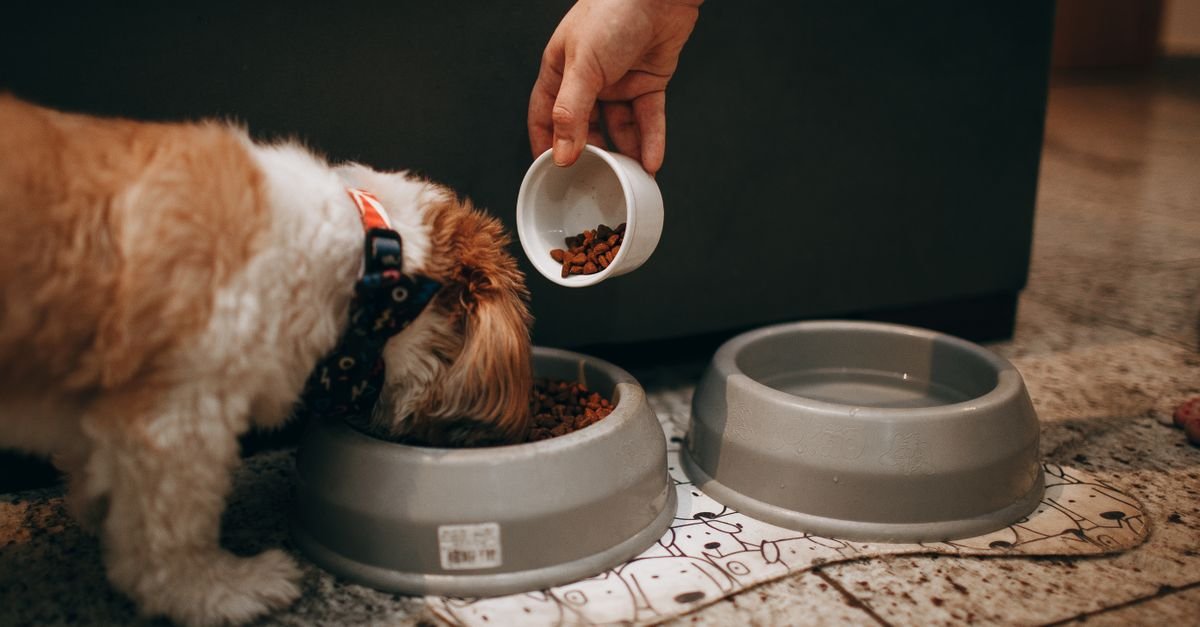
Most adult dogs do well with at least two meals a day, while puppies typically need three to four smaller meals because of their limited stomach capacity.[1] The right number for your dog also depends on size, age, activity level, health status, and breed, so there is no single schedule that fits every dog.[2]
Why Twice a Day Is the Common Starting Point
Feeding an adult dog does not have to be complicated. By recognizing a few basic facts about how dogs respond to routine, you can build a reasonable plan around two daily meals, which is the most common recommendation for adult dogs.[1] One commonly cited approach is offering a meal shortly after your dog wakes up and another around dinnertime, splitting the dog's recommended daily portion into those two servings.[2]
That said, this twice-daily pattern is a starting point, not a fixed rule. It can shift based on your dog's feeding habits, life stage, health status, and your own schedule.[2]
Puppies Need More Frequent, Smaller Meals
Puppies generally benefit from three to four meals a day rather than two. Splitting a puppy's daily food into smaller, more frequent portions matches their smaller stomach capacity.[1] Letting a puppy eat as much as it wants at one sitting, sometimes called free-choice or ad libitum feeding, is not recommended. This style of feeding can contribute to juvenile obesity, encourage binge-eating, and is linked to orthopedic problems and diabetes. Overeating at any meal, not just a puppy's, can also cause stomach discomfort and bloating, leading to slower digestion.[1]
Dogs have a genetically determined adult size, and slower, controlled growth during the puppy stage supports better body condition once they reach adulthood.[1] As your puppy matures, you can gradually reduce the number of daily meals toward the adult pattern, following your veterinarian's guidance on timing for your individual dog.
Why a Consistent Schedule Helps, Beyond Just Mealtime
Dogs are creatures of habit, and a regular feeding schedule works in your favor in several ways:
- House training: A set feeding time makes bathroom breaks more predictable, since most dogs need to go shortly after eating. This matters for puppies and for adult rescue dogs who are still learning household routines.[1][2]
- Coping with change: Meals become an anchor point in the day. A dependable routine can help a dog adjust when the household changes, such as a new baby, a child leaving for college, or a house-sitter filling in while you travel.[1]
- Easier food transitions: When a dog expects food at the same times each day, hunger builds predictably, which tends to make switching to a new food smoother.[1]
- Emotional stability: For dogs that deal with anxiety, a set feeding schedule adds predictability and structure, which may support emotional stability for some dogs.[2]
- Medical routines: If your dog later develops a condition that requires eating at specific times or taking medication with food, a dog already accustomed to a set schedule will adjust more easily. Any medication timing or diet changes for a medical condition should be set by your veterinarian.[1]
What About Free Grazing?
If you have a single dog and no plans to add another, one option is to measure out the full day's food portion and let your dog graze on it, checking at the end of the day for any leftover amount. If you ever need to switch a grazing dog to scheduled meals, you can measure the day's total portion in the morning and offer it in the bowl at several set times, choosing regular times to build a routine. The key in either approach is using a measured daily portion, whether with a measuring cup or a kitchen scale, rather than feeding freely from an unmeasured supply.[1]
Food Toys and Mealtime Engagement
Food toys are another option worth considering alongside a feeding schedule. These range from rolling toys that release kibble intermittently to stationary toys that require the dog to work for each piece of food. They can add mental engagement to mealtime and are often as entertaining for the owner to watch as they are for the dog to use.[1]
Talk to Your Veterinarian About the Details
Your veterinarian remains the best source of guidance on what type of food to feed, how much to feed, and how frequently to feed your particular dog.[1] Factors like your dog's size, age, activity level, health status, and breed all influence the right schedule, and a miniature breed will not necessarily follow the same plan as a large breed.[2] Once you settle on a schedule, keeping it consistent, whether that means two meals for an adult dog or three to four for a growing puppy, gives you a dependable framework to build the rest of your dog's day around. For help tracking what and when your dog eats so you can share accurate details at your next vet visit, see our guide on tracking your pet's food for the vet.
Sources
- Feeding Times and Frequency for Your Dog — VCA Animal Hospitals
- How Many Times a Day Should a Dog Eat? Vet Approved Reasons a Schedule Works — Dogster